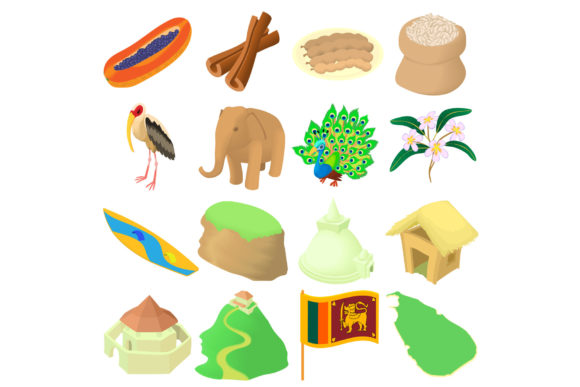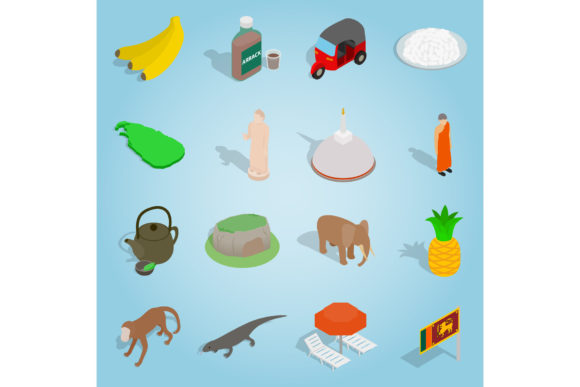
Integrating Sri-lanka Set Icons, Isometric 3d Style into Professional Design Workflows
In the fast-paced world of digital product design and content creation, visual consistency is not just an aesthetic preference; it is a functional necessity. When building interfaces for web and mobile applications that target specific regional audiences or celebrate cultural themes, generic asset libraries often fall short. This is where a specialized collection like the Sri-lanka Set Icons, Isometric 3d Style becomes a critical component of a designer's toolkit. These assets are not merely decorative elements; they are functional building blocks that streamline the UI/UX process, ensuring that projects involving Sri Lankan themes maintain high fidelity and professional polish from concept to deployment.
The shift toward isometric illustration in user interface design has been driven by a need for depth and clarity without sacrificing readability. Unlike flat design, which can sometimes feel sterile, or hyper-realistic 3D, which can bog down load times, the isometric 3d style offers a perfect middle ground. It provides a sense of space and hierarchy that guides the user's eye naturally. When this style is applied to a comprehensive Isometric sri-lanka icons set, it allows creators to construct narratives and interfaces that feel immersive yet remain lightweight enough for modern web and mobile environments.
Strategic Placement in the Project Lifecycle
Understanding where these assets fit into your broader workflow is essential for maximizing their value. The integration of a Universal sri-lanka icons set should ideally begin during the wireframing and prototyping phases, rather than being treated as an afterthought during the final polish. By introducing these elements early, you establish a visual language that informs layout decisions, color palettes, and interaction patterns.
Before a project officially kicks off, during the discovery and planning stage, reviewing the available set of basic sri-lanka elements vector illustration helps define the scope of visual storytelling. For instance, if you are developing a travel booking platform focused on Sri Lanka, identifying icons representing key landmarks, local transport, or cultural symbols early on allows you to map out user journeys more effectively. You can determine where a 3D isometric icon of a tea plantation might serve as a section header or how a stylized representation of a tuk-tuk could function as a navigation marker. This proactive approach prevents the common pitfall of forcing incompatible assets into a finished design, which often leads to visual clutter and inconsistent branding.
During the execution phase, having access to multiple file formats such as JPG, EPS, AI, PSD, and PNG ensures flexibility across different teams and tools. A UX designer working in Figma or Sketch might prefer the scalability of vector files (EPS or AI) to adjust stroke weights or colors to match brand guidelines perfectly. Meanwhile, a front-end developer might require optimized PNGs with transparent backgrounds for immediate implementation in the codebase. Marketing teams creating social media campaigns or presentation decks can utilize the high-resolution JPGs or layered PSD files to create compelling visuals without needing advanced illustration skills. This interoperability reduces friction between departments and accelerates the time-to-market for digital products.
Enhancing User Experience through Cultural Context
The effectiveness of a user interface often hinges on how well it resonates with its intended audience. Using a generic "travel" icon for a destination-specific app can create a disconnect. An Isometric sri-lanka icons set bridges this gap by providing culturally accurate representations that users instantly recognize and trust. Whether it is depicting the unique architecture of local temples, specific flora like the ironwood tree, or traditional culinary items, these details add a layer of authenticity that generic stock photos cannot achieve.
From a usability perspective, isometric icons excel at conveying complex ideas quickly. The three-dimensional perspective allows for the depiction of objects with volume and context. For example, an icon representing "local logistics" could show a delivery truck navigating a stylized map of the island, communicating speed and coverage more effectively than a simple 2D truck silhouette. When integrated into a mobile UI, these icons act as visual anchors, helping users scan menus and locate features faster. The consistent lighting and angle inherent in the isometric style create a rhythmic visual flow, reducing cognitive load and making the application feel more intuitive.
Furthermore, these assets support accessibility goals when used correctly. Because isometric illustrations rely on shape and form rather than just color to convey meaning, they can be designed to remain distinct even for users with certain types of color vision deficiencies. However, it is crucial to pair these icons with appropriate text labels or aria-tags in the development phase to ensure full compliance with accessibility standards. The clarity of the Universal sri-lanka icons makes them excellent candidates for this dual-purpose approach, serving both aesthetic and functional roles.
Technical Implementation and Asset Management
Successfully deploying a Sri-lanka Set Icons, Isometric 3d Style requires a disciplined approach to asset management. One of the primary advantages of purchasing a comprehensive vector illustration set is the ability to customize. Unlike raster images that pixelate when scaled, vector files (AI and EPS) allow you to modify every node and curve. This is particularly important for maintaining consistency across different screen densities, from high-retina mobile displays to large desktop monitors.
When preparing these assets for web use, optimization is key. While the source files may be detailed and layered, the final deliverables must be optimized for performance. If using PNGs, ensure they are compressed without losing the crisp edges that define the isometric look. For developers, implementing these icons as SVGs (converted from the AI or EPS sources) is often the best practice. SVGs offer the scalability of vectors with the ease of embedding directly into HTML, allowing for CSS-based animations and hover effects that can bring the static 3D style to life. For instance, a subtle lift or shadow expansion on hover can make the isometric icons feel interactive and responsive.
Organization within your design system is another critical factor. Create a dedicated library or component folder specifically for these regional icons. Tag them logically based on their function (e.g., "navigation," "feature," "decoration") and their subject matter (e.g., "culture," "nature," "infrastructure"). This structured approach ensures that as your team grows or as the project evolves, anyone can find the right set of basic sri-lanka elements without duplicating efforts or introducing visual inconsistencies. Consistency in usage—such as maintaining a uniform scale and rotation angle—is what separates a professional interface from an amateur one.
Long-Term Value and Scalability
Investing in a high-quality icon set yields dividends long after the initial launch. As your product scales, you will likely need to add new features or expand into new content areas. Having a robust library of Universal sri-lanka icons to use for web and mobile UI means you can extend your design language seamlessly. Instead of hunting for new assets that might clash with your existing style, you can rely on the established visual grammar of the isometric set. This scalability is vital for brands aiming to build a lasting presence in the Sri Lankan market or for global platforms launching localized versions of their services.
Moreover, these assets are versatile enough to transcend digital screens. The same Isometric 3d Style illustrations can be repurposed for print materials, pitch decks, merchandise, and environmental graphics. The vector nature of the source files ensures that an icon designed for a mobile app button can be blown up for a trade show banner without any loss in quality. This cross-media compatibility maximizes the return on investment for the asset purchase, allowing marketing and design teams to maintain a unified brand voice across all touchpoints.
In conclusion, the Sri-lanka Set Icons, Isometric 3d Style is more than just a collection of images; it is a strategic resource that enhances workflow efficiency, cultural relevance, and visual coherence. By integrating these assets thoughtfully into your planning, design, and development processes, you create digital experiences that are not only beautiful but also deeply connected to the user's context. Whether you are a freelancer building a portfolio piece, a startup launching a new app, or an enterprise refining its regional strategy, leveraging these specialized tools allows you to execute your vision with precision and professionalism. The key lies in treating these icons as integral parts of the system, managing them with care, and utilizing their flexibility to adapt to the evolving needs of your projects.