Choosing the Right Mandala Design: A Guide to Formats, Applications, and Text Effects
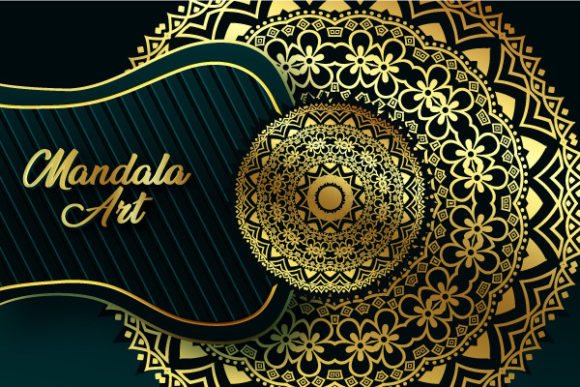
The term Mandala originates from Sanskrit, meaning "circle," and represents a geometric configuration of symbols used in various spiritual traditions, particularly Hinduism and Buddhism. In contemporary design, however, the mandala has transcended its religious roots to become a versatile aesthetic element. Whether you are creating a meditation poster, designing a wedding invitation, or looking for a unique tattoo concept, understanding the nuances of mandala art is essential. This guide explores the distinct characteristics of mandala designs, compares different file formats and styles, and helps you evaluate which resources best fit your specific project needs.
Defining the Mandala Aesthetic and Its Distinct Qualities
At its core, a mandala is defined by radial symmetry. Unlike linear patterns or random organic shapes, a mandala radiates from a central point, creating a sense of balance, harmony, and unity. This structural integrity is what makes it distinct from other decorative motifs like standard floral borders or abstract splashes. The complexity can range from simple geometric circles to intricate arabesque interlacings and dense floral arrangements.
What sets a high-quality mandala apart in a professional context is its scalability and clarity. When evaluating design assets, particularly vector illustrations, the precision of the lines is paramount. For applications like adult coloring book pages or henna and mehndi stencils, the line weight must be consistent to ensure a pleasant user experience. In contrast, a low-resolution raster image might appear pixelated when enlarged for a large-format print, ruining the meditative quality of the piece. Therefore, the distinction often lies not just in the visual style, but in the technical execution of the radial symmetry.
Evaluating File Formats: Vector vs. Raster for Professional Use
One of the most critical decisions when selecting a mandala resource is the file format. The market offers a variety of options, primarily divided between vector formats (such as AI and EPS) and raster formats (like JPG). Understanding the trade-offs between these formats is vital for making an informed choice based on your intended output.
- Vector Files (AI, EPS): These are mathematically defined paths, meaning they can be scaled infinitely without losing quality. If your project involves large-scale printing, such as a wall mural, a fashion textile print, or a business card that requires crisp edges, vector files are the superior choice. They allow for full editability; you can change colors, adjust line thickness, or isolate specific elements of the circular pattern. Furthermore, professional packages often include editable text effects within these vector files, allowing for seamless integration of typography.
- Raster Files (JPG): These are composed of pixels. While they are universally compatible and easy to view, they have a fixed resolution. A JPG might suffice for a web background or a small digital greeting card, but it poses significant risks for print projects. If you attempt to enlarge a JPG for a poster, the image will degrade. However, JPGs are often included in bundles as a convenience for quick previews or for users who do not have access to vector editing software.
For professionals requiring print-ready files, the presence of AI CC and EPS CC formats is a strong indicator of quality. These formats ensure that the floral designs and geometric elements remain sharp regardless of the final dimensions. When comparing product listings, prioritize those that offer source files over those that only provide flattened images.
Comparing Styles: Geometric, Floral, and Arabesque Variations
Not all mandalas serve the same purpose. The stylistic approach significantly influences where the design can be effectively applied. When researching options, consider the following stylistic categories:
Geometric and Symmetrical Patterns
These designs rely heavily on mathematical precision and repeating shapes. They are ideal for business cards, gift vouchers, and corporate branding where a clean, structured look is required. The rigidity of geometric mandalas conveys stability and order, making them less suitable for free-flowing artistic expressions like watercolor backgrounds but perfect for laser cutting or precise embroidery.
Floral and Organic Mandalas
Incorporating leaves, petals, and vines, these variations soften the strict geometry of traditional mandalas. They are the preferred choice for wedding invitations, greeting cards, and fashion designs. The organic nature of these elements adds a touch of elegance and warmth. When selecting these for tattoo or henna applications, ensure the flow of the "petals" works with the curvature of the human body, as a design that looks good on paper may not translate well to skin without adjustment.
Arabesque and Intricate Line Work
Characterized by complex, interlacing lines, this style is deeply rooted in Islamic art and is highly effective for meditation posters and adult coloring books. The density of the lines provides a challenging and engaging activity for colorists and creates a visually hypnotic effect for viewers. However, this complexity can be a limitation for small-scale prints; fine details may blur if the output size is too small or the printing method lacks high DPI capabilities.
The Role of Typography and Text Effects in Mandala Design
A unique aspect of modern mandala resources is the integration of text effects. Traditionally, mandalas were purely symbolic, but contemporary design often merges typography with radial symmetry for logos, event titles, or inspirational quotes. When evaluating a design package that claims to include text effects, specifically for Adobe Illustrator, consider the ease of customization.
High-quality text effect assets allow users to modify the content without breaking the stylistic integrity of the design. In a professional workflow, you should be able to click on the graphic style feature or directly edit the text layer. A crucial factor in decision-making is font compatibility. Some advanced templates allow you to identify the font used via the "character" panel even if it is not installed on your system, though typically, you will need to install the specific font or substitute it with a similar typeface to maintain the layout. If a product requires extensive manual re-kerning or path adjustments every time you change a letter, it may not be efficient for tight deadlines. Look for resources where the text effect is non-destructive and easily adaptable for both print and web projects.
Application-Specific Considerations and Limitations
While a single mandala illustration can be versatile, it is rarely a "one-size-fits-all" solution. Different applications impose different constraints:
- Tattoo and Henna: The primary concern here is longevity and flow. A design that is too detailed may blur over time on skin. Additionally, the design must be adaptable to curved surfaces. A rigid circular pattern might need to be distorted slightly to fit an arm or leg properly.
- Coloring Books: The line weight must be thick enough to prevent bleed-through when colored with markers, yet thin enough to allow for detail. Closed shapes are essential to prevent colors from spilling into adjacent areas unintentionally.
- Fashion and Textiles: Repeat patterns are often more useful than single isolated mandalas. If you are designing fabric, check if the asset includes a seamless pattern swatch or if you will need to manually create a repeat, which adds to production time.
- Web and Digital Media: File size becomes a constraint. While vectors are great for design, they often need to be exported as optimized SVGs or PNGs for web use to ensure fast loading times. A massive, unoptimized EPS file is not suitable for direct website embedding.
Making the Final Decision: Checklist for Buyers
When choosing a mandala resource, avoid being swayed solely by the visual preview. Instead, conduct a practical evaluation based on your project requirements. Ask yourself the following questions:
- Is the file format compatible with my software? Ensure you have the correct version of Adobe Illustrator (e.g., CC) if the file requires it.
- Does the license cover my intended use? Verify if the asset allows for commercial use, especially for products like gift vouchers or merchandise.
- Are the layers organized? A well-structured AI file with grouped elements saves hours of cleanup time compared to a flattened mess of paths.
- Is the text effect truly editable? Test the demo if possible, or read reviews to confirm that changing the text does not require rebuilding the entire graphic.
In conclusion, the mandala remains a powerful tool in the designer's arsenal, offering a blend of spiritual symbolism and aesthetic versatility. By carefully weighing the differences between vector and raster formats, understanding the specific strengths of geometric versus floral styles, and verifying the usability of included text effects, you can select the right assets to elevate your projects. Whether for a serene meditation poster or a bold fashion statement, the right mandala design bridges the gap between artistic vision and technical precision.